
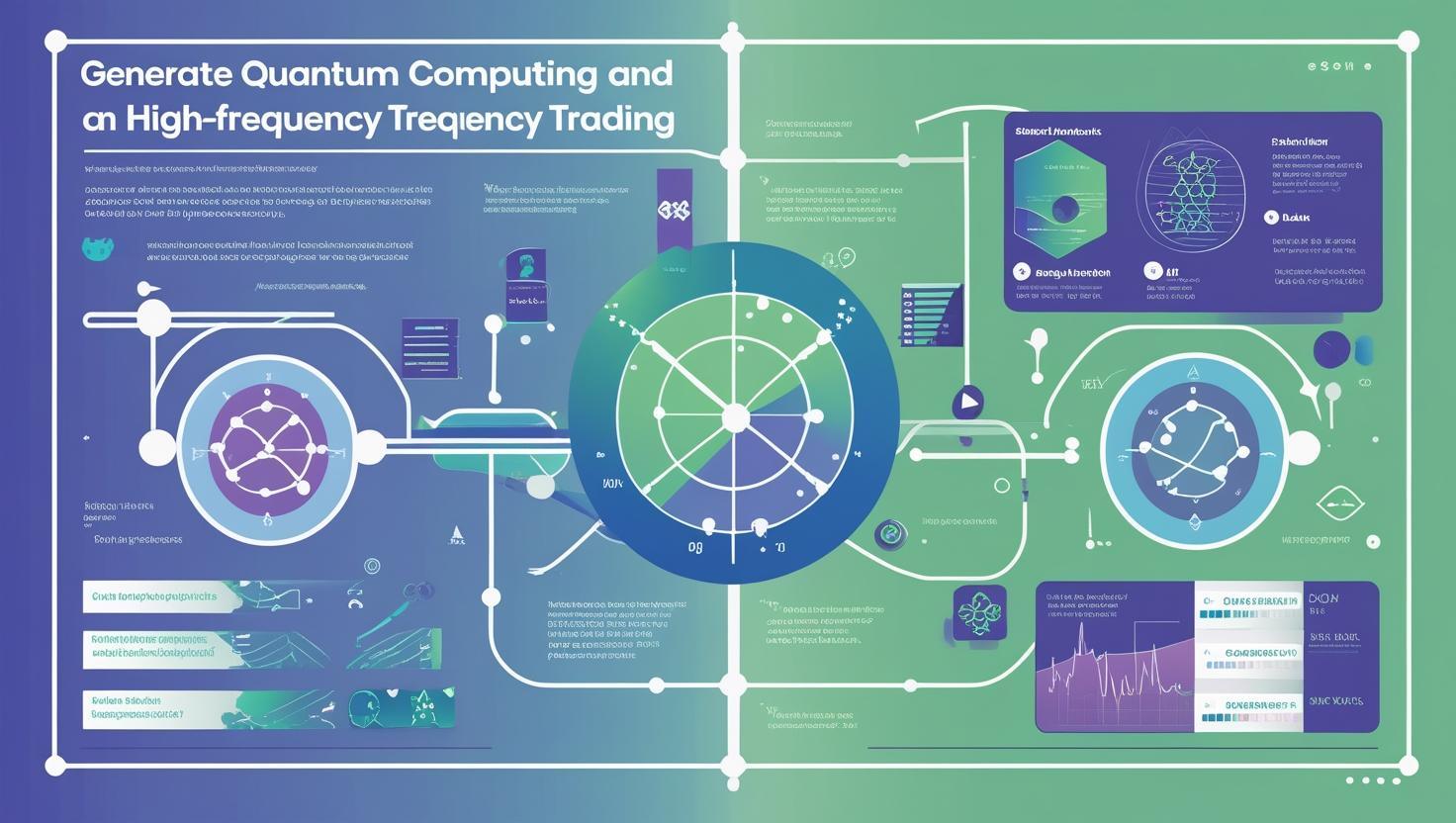
Beyond Algorithms: How Quantum Computing is Poised to Disrupt High-Frequency Trading & Investment
Prepare for a financial revolution driven by quantum-powered insights and speed.
The Next Frontier in Finance: Quantum Computing
The world of finance, traditionally powered by classical algorithms and high-speed transactions, is on the verge of a profound transformation. Quantum computing, a nascent technology, promises to solve problems currently impossible for even the most powerful supercomputers, potentially reshaping everything from high-frequency trading to complex investment strategies. Understanding this shift is crucial for anyone in the financial sector.
What is Quantum Computing? (Simplified)
Bits vs. Qubits
Classical computers use **bits** (0 or 1).
Quantum computers use **qubits** (0, 1, or both simultaneously).
Key Quantum Principles
Superposition
A qubit can exist in multiple states at once.
Entanglement
Qubits linked, regardless of distance.
Quantum Speedup
Solve certain problems exponentially faster.
Why Quantum for Finance? (Solving the Impossible)
Traditional computers struggle with certain types of complex, multi-variable problems. Quantum computers are designed to excel at these, opening new frontiers for financial analysis.
This chart illustrates how quantum computing can tackle problem complexities that overwhelm classical systems, offering a path to solve previously intractable financial challenges.
Impact on High-Frequency Trading (HFT)
HFT thrives on speed and finding tiny inefficiencies. Quantum computers could deliver unprecedented speed and ability to identify complex arbitrage opportunities across markets.
Latency Race: Quantum vs. Classical
In HFT, every microsecond counts. Quantum algorithms promise to reduce latency for complex calculations to unimaginable levels.
Quantum-Powered Arbitrage Discovery
Traditional systems can only see so many market dimensions. Quantum could find complex, multi-asset, multi-market arbitrage opportunities in milliseconds.
Impact on Hedge Funds & Institutions
Beyond speed, quantum computing offers solutions for complex, multi-dimensional problems that are core to institutional finance.
Advanced Portfolio Optimization
Optimizing a portfolio across thousands of assets with various constraints is a monumental task. Quantum algorithms could find truly optimal portfolios faster.
Illustrates potential for more complex, efficient portfolio solutions.
Enhanced Risk Management & Simulation
Simulating market scenarios and calculating risk (like Value-at-Risk) across complex portfolios can be computationally intensive. Quantum could run far more sophisticated simulations.
Shows how quantum simulations might provide deeper insights into tail risks.
Fraud Detection & Algorithmic Trading AI
Quantum machine learning algorithms could process vast datasets to identify subtle fraud patterns or optimize algorithmic trading strategies in real-time. This could lead to more robust AI models that learn and adapt faster than ever before.
Identify Complex Patterns
Quantum Machine Learning
Optimize Trading Strategies
Detect Anomalies Instantly
What About Retail Traders?
While direct access to quantum hardware is years away for most, its impact will trickle down:
- **Improved Trading Platforms:** Brokers may leverage quantum-powered backend analytics to offer better insights and tools.
- **Smarter Robo-Advisors:** AI-driven investment platforms could use quantum algorithms for hyper-personalized portfolios.
- **Reduced Transaction Costs:** Increased market efficiency from HFT could indirectly benefit all participants.
Challenges & The Road Ahead
Quantum computing is still in its early stages. Significant challenges remain, including:
- **Hardware Limitations:** Building stable, large-scale quantum computers is incredibly difficult.
- **Error Correction:** Qubits are fragile and prone to errors, requiring advanced error correction.
- **Algorithm Development:** Creating practical quantum algorithms for financial problems is an ongoing research area.
- **Talent Gap:** A shortage of quantum scientists and engineers.
While mainstream commercial application in finance is likely a decade or more away, early prototypes are already demonstrating capabilities. The journey from classical to quantum finance is just beginning.
Leave a Reply